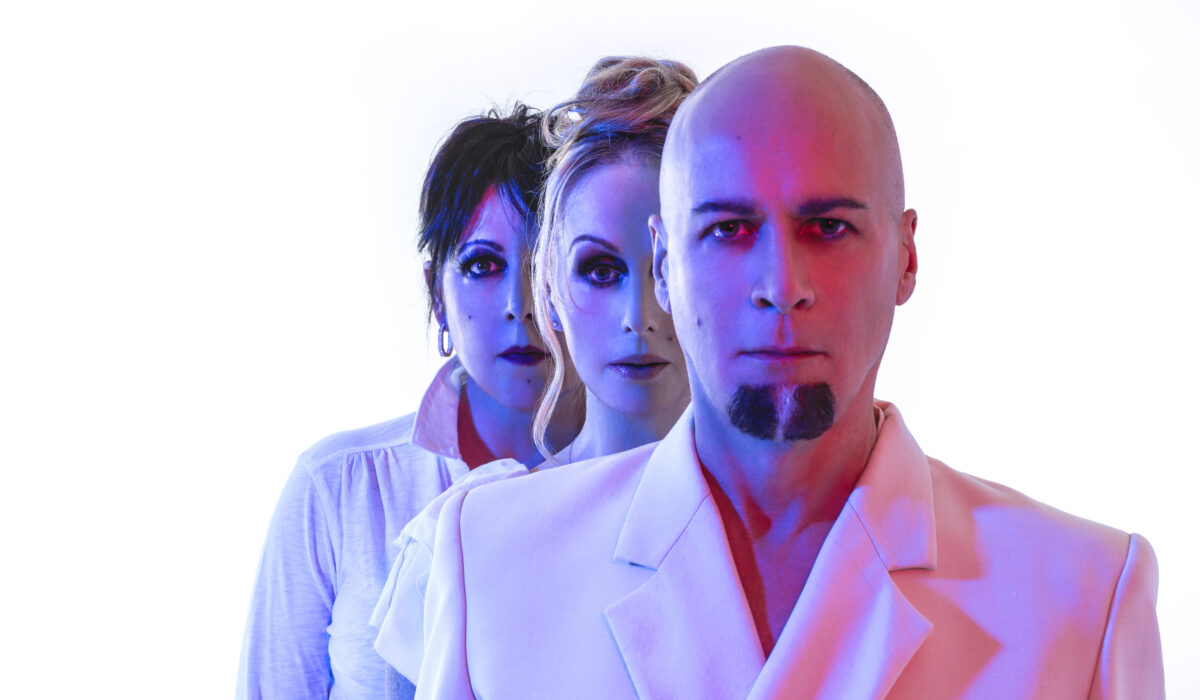
Few bands surfed the strange electrical storm of the early-1980s synth-pop revolution quite like The Human League. Coming out of Sheffield’s industrial gloom with a clutch of synthesizers and an art-school sense that pop could be both stylish and subversive, the band detonated in 1981 with Dare and the global smash “Don’t You Want Me.” Hitting a homerun in fledgling MTV’s ballpark, their cinematic, noir-tinged video landed at precisely the moment when music television was still figuring out what it wanted to be. Follow-ups like “Mirror Man” and “(Keep Feeling) Fascination” kept the band lodged firmly in MTV’s first wave (and on the top 40) with sleek electronic pop wrapped in bold visual ideas that helped define a smarter look for music videos. Along the way, vocalist Philip Oakey even scored a hit outside the band with the shimmering Giorgio Moroder collaboration “Together in Electric Dreams,” released on both the soundtrack to Electric Dreams and the album Philip Oakey & Giorgio Moroder.
But The Human League were never just early-MTV poster children. As the decade rolled forward and pop competition grew sharper, the band proved they could adapt as well as innovate. Their 1986 album Crash, produced by the Minneapolis sound architects Jimmy Jam and Terry Lewis, pushed their synth-pop sensibility into sleek R&B territory and sent the single “Human” to No. 1 in the United States; the League could still compete in a pop landscape suddenly crowded with glossy new contenders. More than four decades after their breakthrough, the band’s legacy is still alive onstage. This summer they return to North America for The Generations Tour, sharing the bill with fellow British icons Soft Cell and Alison Moyet for a coast-to-coast run beginning June 2. I spoke with Oakey recently about those early MTV days, the making of classic Human League videos, working with producers on opposite ends of the spectrum, and managing to stay together (and still enjoy touring!).

Stephen Pitalo: I was reading something the other day that I thought was interesting, that you’re a fan of Carla Bley’s Escalator over the Hill.
Philip Oakey: Absolutely! I probably prefer the Bley-Peacock Synthesizer Show from that time. That was her husband, Paul. Yeah, Escalator over the Hill – with Jack Bruce singing!
Stephen Pitalo: Yep. Linda Ronstadt’s on there too.
Philip Oakey: I had forgotten that. Yes. I quite liked the many different faces of jazz. I like traditional jazz, and I like some quite wild jazz. I like jazz fusion as well.
Stephen Pitalo: Your old band mate Martyn Ware [co-founder of Human League in 1977] was saying that you turned him on to Carla Bley. He would never have known that it had even existed without you. So I thought that was interesting.
Philip Oakey: That was a two way thing, because Martyn had very interesting, eclectic tastes. Martyn would find things you had never heard. You’d go round to his flat and he’d just got a selection of records you’d never heard. So that’s brilliant.
Stephen Pitalo: This tour coming up is really exciting and I just wanted to ask you a few things when it came to producers and also in your solo work. What would you say is the biggest difference between working with Giorgio Moroder [producer on Philip’s solo album and his solo hit “Together in Electric Dreams”] and working with Jimmy Jam and Terry Lewis [producer on Human League’s Crash album which generated their #1 hit “Human”]?
Philip Oakey: I don’t think that two people could be more different. Jimmy and Terry are so much about feeling and just making sure that everything’s right – especially making sure that everything’s right for a vocalist, because when we worked with them, they did the backings, which they largely did themselves very quickly. Then we took months, at least a couple of months doing the singing because it was so important for them to make the singing easy. They were very hard on instrumentalists, but very easy on the singers, whereas Giorgio believed the first take was always best. When we did the single for Electric Dreams, I had got the tune a little bit wrong, so we brought it out, I changed the words and I went into the studio to give him a demo of what I thought the new sound the new shape would be, and did it. And he said, “Okay, Philip, great. We’re done.” And I said, “Shall I do it properly?” And he said, “No, we’re done.” And I insisted on [ doing it once more so he could drop in any bits that were wrong. I don’t know if he used them though. And Giorgio just did things so wonderfully quickly.
Stephen Pitalo: The vocals for just the song “Human” took almost a month?
Philip Oakey: I think they took a month. Yeah.
Stephen Pitalo: Now, what in the world are they doing by the second week?
Philip Oakey: With Jimmy and Terry, if you sang it through a few times and they thought your voice wasn’t right, they’d say “Okay, look, you’re not feeling it today. We’ll come in tomorrow and do it.” They were very attentive to vocalists. They’re wonderful producers, and I kick myself every day for not taking notes of what they did. I remember Jimmy Jam one day gave me a list of the things that you need to do to make a great single. I remember some…one was “pretty tunes, driving bassline,” something like that, and I never wrote it down. I really wish I’d written it down.
Stephen Pitalo: The Human League’s “Don’t You Want Me” music video has become iconic, and it’s very cinematic, which I imagine came naturally since the song is a narrative. What do you remember from the process of making that video?
Philip Oakey: I remember it was quite hard work. We worked through the night to do the outside scenes with the car. The reason that we went with Steve was we had made one video on videotape for “Open Your Heart” and we didn’t like the feel. At the same time, a group called Ultravox had a number one hit in Britain with “Vienna,” where they used 35 millimeter film in black and white [for the video]. We were in France, and we really wanted to use film. And I think Steve was friendly with Adrian [Wright, also original member], who was in the group at the time, and Adrian had done a filmmaking course at art college, so he knew all about the difference between video and film and things like that. It was hard work. We were very aware that a lot of money was being spent because, at that stage, we hadn’t really made any money, so it was quite pressurized.
Stephen Pitalo: The idea of “meta” is very popular at the moment, with people being very aware of themselves. This video connects to that idea, being that the video is about the making of a movie.
Philip Oakey: Everyone was going on about that at the time, as I remember. It was the Francois Truffaut film Day for Night that was an inspiration, so that showed that people were being very influenced. I think it was the rise of what they call “postmodernism” now, and people referring backwards, and thinking people’s perception was being changed. We were quite an arty band in those days.
Stephen Pitalo: [Music video director of “Fascination” and “Don’t You Want Me”] Steve Barron told me that when you were shooting ”Fascination” in Peckham, the crew painted the giant red dot on the building but also on the street, and the paint was not as easily removed as first thought. Much of the red paint was still on the street after the shoot, so as a result, Steve Barron has been since banned from the Royal Borough of Peckham.
Philip Oakey: That doesn’t surprise me. Really, it was a wonderful time. When you think (laughs heartily) just the joy being in the music industry at that stage, and let’s face it, there was excess. A lot of money was spent that maybe shouldn’t be justified, but to have grown up loving film and loving art and loving music, and to walk down the street and see that someone had painted a huge dot on the street for you was amazing! But then, turning up and having a proper film crew with runners and people checking the gate and checking the focus? It was like a dream.
Stephen Pitalo: Do you recall anything else from the shoot?
Philip Oakey: I seem to remember some slightly scurrilous stories going on because a couple of the members of the crew had actually been making a film with Sylvia Kristel a few weeks earlier, but I don’t think I’d better pass them on. I think we heard some stories about the making of those films that made our hair stand on end. [Kristel was the star of soft-core porn classic Emmanuelle and its sequels.]
Stephen Pitalo: Your band’s rise happened almost in parallel with the emergence of MTV. “Don’t You Want Me” became one of those landmark early videos that seemed to arrive at exactly the right moment, and later clips like “Mirror Man,” “Fascination” and “Human” continued that visual connection with the audience. When you try to explain that era to people today – when everything is digital, on demand, and seemingly instantly created – how do you describe what it was like at that time, meaning a time when music and film merged into something new on television, something that not only wasn’t created easily, but could not be seen on demand either?
Philip Oakey: I feel a little bit sorry for people not having to work as hard, but I think that’s the classic thing that an old guy would say now. It’s silly to deny the democratization of it all, the fact that if you can afford a half decent mobile phone, now you can go out and do some really great groundbreaking art. It’s hard to sell it, though, because there’s much more competition, now that other people have got the chance to do it. But I don’t know, I savor that it was a little bit of a battle, and that made us appreciate it more. Like I said, it was an absolute joy to me just to be on a film set with people who actually made real films. I knew I didn’t deserve it but that was wonderful. Maybe that’s the part that people miss now.
Stephen Pitalo: You make a very good point. Back then, so much of art, music and film was a collaborative effort to get things done because everybody couldn’t do everything themselves. Today, some kids can sit in their bedroom and make an album all by themselves. There’s something that gets lost in that method, I think, don’t you?
Philip Oakey: I’m the world’s biggest Prince fan, but I always thought it must have been quite lonely to be so good that you could do everything. It was an absolute joy to be allowed to work with people very often that I knew. I loved the collaboration, and still do. That brilliant thing of walking into a studio on a Monday, and by Friday you’d actually achieved something with another human being? That was great. Also, I didn’t have the talent to do it on my own. (laughs)
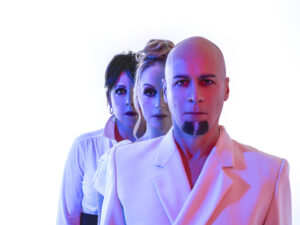
Stephen Pitalo: It’s been a long time since the three core members – you, Joanne Catherall and Susan Ann Sulley – became the Human League as we know it today. 46 years in fact! How do you keep a band together that long, and one that still wants go out on the road?
Philip Oakey: After a while, you learn how not to tread on other people’s toes. We are lucky that we are very different. We take care of different things. I oversee the musical side. Susan’s brilliant at the promotional stuff, and Joanne keeps an overview on everything that the band’s doing all the time. You do learn after a few years that if you said something out of turn, you’d better go and sit at the back of the bus for a couple of days and not get on people’s nerves. Let people get over it. And just the time makes it work.
Stephen Pitalo: Lastly, what is your favorite music video of your band, and what is your favorite music video by another artist ?
Philip Oakey: I think maybe “Don’t You Want Me” is my favorite of ours. And I’m a bit of a weirdo. I really like Aphex Twin’s “Windowlicker” video”.
Stephen Pitalo: Oh, I love Aphex Twin. He just really goes for it.
Philip Oakey: I’m a science fiction weirdo guy. I love four minutes of going, wow, I could never have thought of that. I could never have imagined that I’d be taken somewhere wonderful.
The upcoming 21-date tour will pack an evening with all three bands’ classic hits, deep cuts and new songs. The first stop is June 2nd at Cal Coast Credit Union Open Air Theatre in San Diego, with dates in cities including Los Angeles, Dallas, Nashville, Chicago, New York, Philadelphia and Niagara. Read more about it all right here.